Stop The Clock
There's no shortage of drama in the hospitality industry

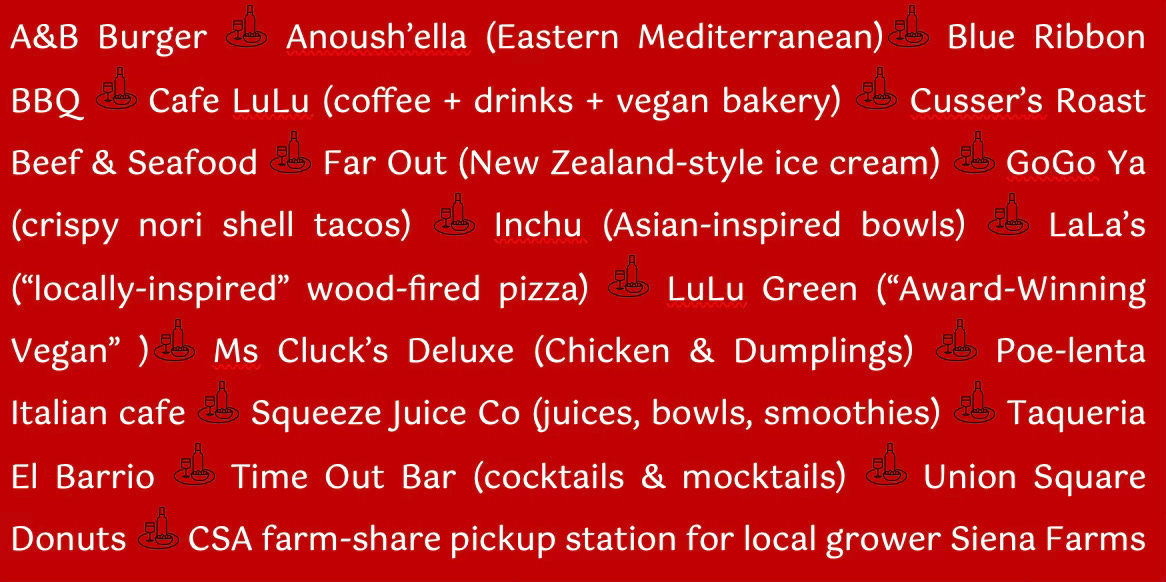
Anyone who has worked in the food service industry can tell you that there is no shortage of drama behind the counters where you pick up your power smoothies, bacon burgers, and Thai Bowls to go. Boston’s Time Out Market, the big food hall located in Landmark Center near Fenway Park, provided plenty of buzz lately for people on both sides of the counter.
I visited Time Out Market with my family around the start of the new year, remarking to them how the place seemed to be finding its footing at last.
I had been so excited when it opened in June 2019. I love food halls with their eclectic offerings of everything from quick-serve street food to full-plate entrees. The variety presents a mosaic, this style here, that taste there, another flavor palette over there, and it all comes together in a sometimes unlikely yet appealing whole.
When it opened, Time Out Market offered promise as an ideal meet-up spot for pre-game meals when the Sox played home at Fenway, or for groups of students from nearby colleges, work colleagues, or parents and kids to connect after sports or Boston-area school events.


The vision turned into a less-exciting execution. Covid arrived less than a year after Time Out’s opening. We all know what followed. The world shut down. Work habits changed, people stayed home, dining patterns and spending changed, leaving an indelible mark on the restaurant industry. Time Out Market bore the change as much as anyone.
Like a smile that got in a fight, booth after booth went dark, creating gaps in the rows of merchant kitchens. The few steady residents looked lonely. As much as their tenacious durability was worth celebrating, with so many vacancies surrounding them, the environment they operated in felt uninviting.
Each time I visited, which admittedly was not too often, I held my breath, my lungs filled with hope that new chefs might arrive to fill the empty stalls, and that they would do well enough to remain anchored there.
And so: the scene we discovered over the holidays was thrilling.
On that cold weekend night, people milled around the bars and packed seats along the massive communal eating tables in the cavernous food hall. A backdrop of lively, head-bopping DJ music filled the space with bright energy. Every vendor stall was occupied and operational.
The full house looked to me like a renaissance. (At last!)
I was misguided.
A week or so after that visit, news sources announced that the food hall would shutter for good at the end of January.
The revelation felt jarring.
What I had seen had seemed so promising. I did what many people do in these situations. We start with what-ifs, blaming ourselves. “If only I’d visited more often…” these stories begin. Yet such regrets are pointless. Bigger forces fed into the closure; the food hall’s fate had already been decided.
Rather than mourn, I resolved to make good enjoying what I hadn’t taken full advantage of up to this point. Time was short to say goodbye. I decided to spend a week visiting daily to enjoy meals from different purveyors before the clock ran out on Time Out Market.
A frigid wind funneled between the buildings along Brookline Avenue as I made my pilgrimage towards Landmark Center. My eyes burned with tears. I hunched over, trying to shield my face inside my parka. Nothing could shield me from the searing assault — or keep my eyelashes from freezing. I could barely see as I pulled on the heavy glass doors into the food hall.
I paused at a bar past the Jumbotron tv near the entry. I looked around, blinking furiously as I tried to bring my surroundings into focus. The place was next to empty. Few were as foolish as me to venture out in this weather to enjoy what the Market had to offer. Already, I thought, it’s been condemned to obsolescence.
A black-clad bartender approached. “Can I get you anything? I can’t give you anything alcoholic, but I’ve got mocktails or soft drinks.”
I shook my head. “No thanks. I just need a minute.” I paused. He stood still, looking at me.
“I’m not crying,” I reassured him, wiping tears from my face. “I’m just trying to thaw my eyes. But it is a little sad about this place closing,” I said, turning self-consciously cheeky.
Then the bartender, whose name is Alex, served up a twist. A local real estate developer purchased the food hall days after the closure had been announced by Time Out. It was not closing after all. All the hospitality workers behind the counters, like Alex, who thought their jobs were gone could call off the search for new positions.
“It’s been a little crazy,” Alex openly admitted, then confessed, “I hadn’t started looking yet, so I guess I’m lucky.”
As we all are, given renewed opportunity to enjoy what we almost lost.